
The shipping and storage of goods, large or small, requires a level of coordination and expertise that few consider outside of the world of logistics. The layers of process, technology and oversight when done right is a testament to the countless hours of planning and hardworking people in the industry. Current geopolitical and tariff tensions further strain the supply-chain infrastructure and puts pressure on providers to do more with less. Thankfully some of the technology tools available to ensure goods are secure, delivered on time and workers are safe has evolved in recent years, and shed much of its restrictive costs.
Security & Asset Tracking
Protecting inventory is no longer just about locking doors—it’s about creating a smart, responsive environment where every movement is authenticated and every risk is visible. Modern access control systems, including door sensors, play a critical role in safeguarding products from both unintentional damage and deliberate tampering. Across the entire supply chain, billions of dollars of losses are written off annually with a large portion attributed to preventable operational errors and unauthorized access. Smart access monitoring directly reduces these avoidable losses.
Video verification has emerged as one of the most impactful technologies in security operations. By validating sensor alerts with real-time or historically referenced video, companies can drastically reduce false alarms—many by up to 90%, based on data from leading alarm services providers. This not only strengthens on-site security but also increases the accuracy of incident reporting and response.
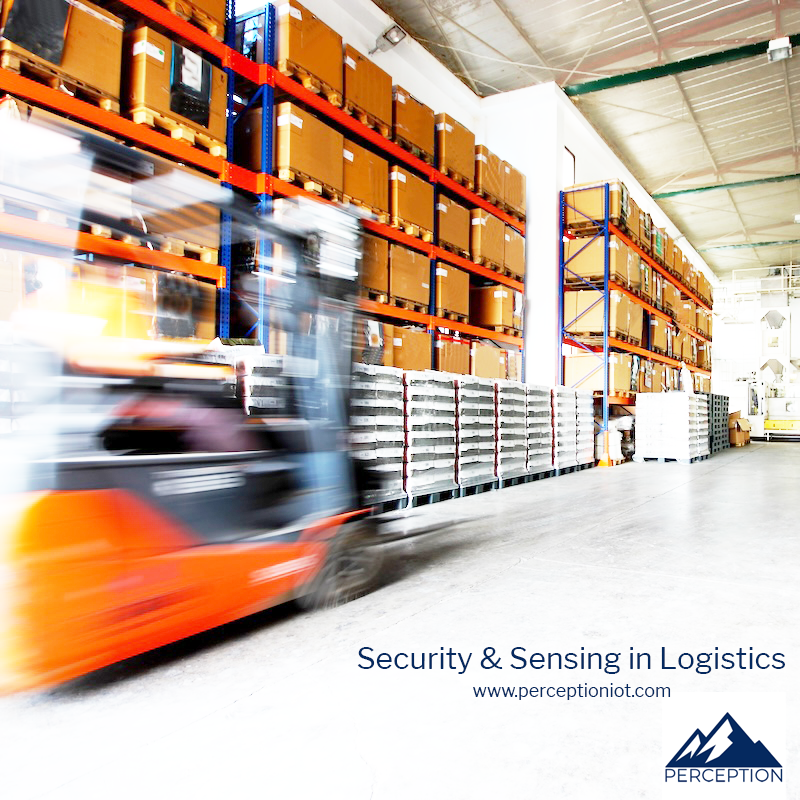
The integration of wireless IoT sensors has expanded the depth of operational insights. For example, forklift-movement and tilt sensors offer critical telemetry that helps validate inventory handling, prevent accidents, and reduce product damage. The Occupational Safety and Health Administration (OSHA) in the U.S. estimates that more stringent training / safety policies could reduce ~70% of forklift accidents, underscoring the need for proactive, sensor-based awareness. Because today’s wireless sensors are inexpensive and easy to deploy, organizations can place dozens—or even hundreds—of data points throughout a facility without the high cost of cabling or downtime.
Environmental monitoring, when unified with the security ecosystem, provides a holistic view of asset risk. Whether it’s temperature deviations, humidity intrusion, or air-quality alerts, tying these metrics into a centralized platform allows operators to respond swiftly and cohesively to incidents. A dynamic implementation approach further accelerates deployment, enabling rapid rollout of sensors across large facilities while minimizing operational disruption.
Sustainability & Quality Control
Sustainability and quality assurance are no longer optional—customers, regulators, and stakeholders expect them. Sensor data collected at the pallet or container level provides an additional layer of protection for perishables and high-value goods. The global cold chain market, which reached $328 billion in 2023 (Grand View Research), is increasingly adopting item-level or container-level IoT sensors to reduce spoilage, improve traceability, and guarantee freshness throughout the supply chain.
Layered environmental monitoring also strengthens compliance efforts. Industries such as food production, pharmaceuticals, and logistics are required to maintain verifiable audit trails for temperature, humidity, and handling conditions. Automated IoT-driven data collection reduces manual labor while providing accurate, time-stamped records that aids in following HACCP principles.
Traffic-mapping for personnel and forklifts is becoming a powerful tool for enhancing workplace safety. Using wireless motion and tracking sensors, organizations can identify congested pathways, unsafe driving patterns, or high-risk intersections within facilities. Studies show that data-driven traffic optimization can reduce industrial accidents by up to 25%, improving both employee safety and operational efficiency.
Predictive maintenance is another high-impact advantage. By monitoring the performance and environmental impact of equipment—such as compressors, HVAC systems, fans, or cooling units—organizations can schedule proactive servicing before costly failures occur. According to Deloitte, predictive maintenance can reduce breakdowns by 70% and cut maintenance costs by up to 25%, offering immediate financial benefits.
Beyond metrics like temperature and humidity, localized monitoring of Carbon Monoxide and Particulate Matter ensures personnel are working in safe environments. Research shows that improved air quality can increase worker productivity by 6–11% and decrease absenteeism. Monitoring these air-quality parameters in loading areas, underground garages, and sally ports ensures that operational spaces remain healthy and compliant with occupational safety standards.
Next Steps
There are many stakeholders in the running of any logistics facility but when dealing with quality assurance, safety and security you find few competing objectives. Sales gets a market differentiator and ability to justify healthy profit margins, Operations get more tools in their kit and Security benefits from faster, actionable data. There’s a cost of inaction, but when the true costs of inefficiencies are measured and total-cost-of-ownership is identified, the path gets clearer. More granular and accurate data allows for better, faster decision making.
Often a single location and cost-effective Proof of Concept trial is the best starting point to seeing where the true value is for your specific needs. Partnering with a qualified Integrator that focuses on the complete life cycle of your investment can mean the difference between success and avoidable failure. It all starts with a discussion.